
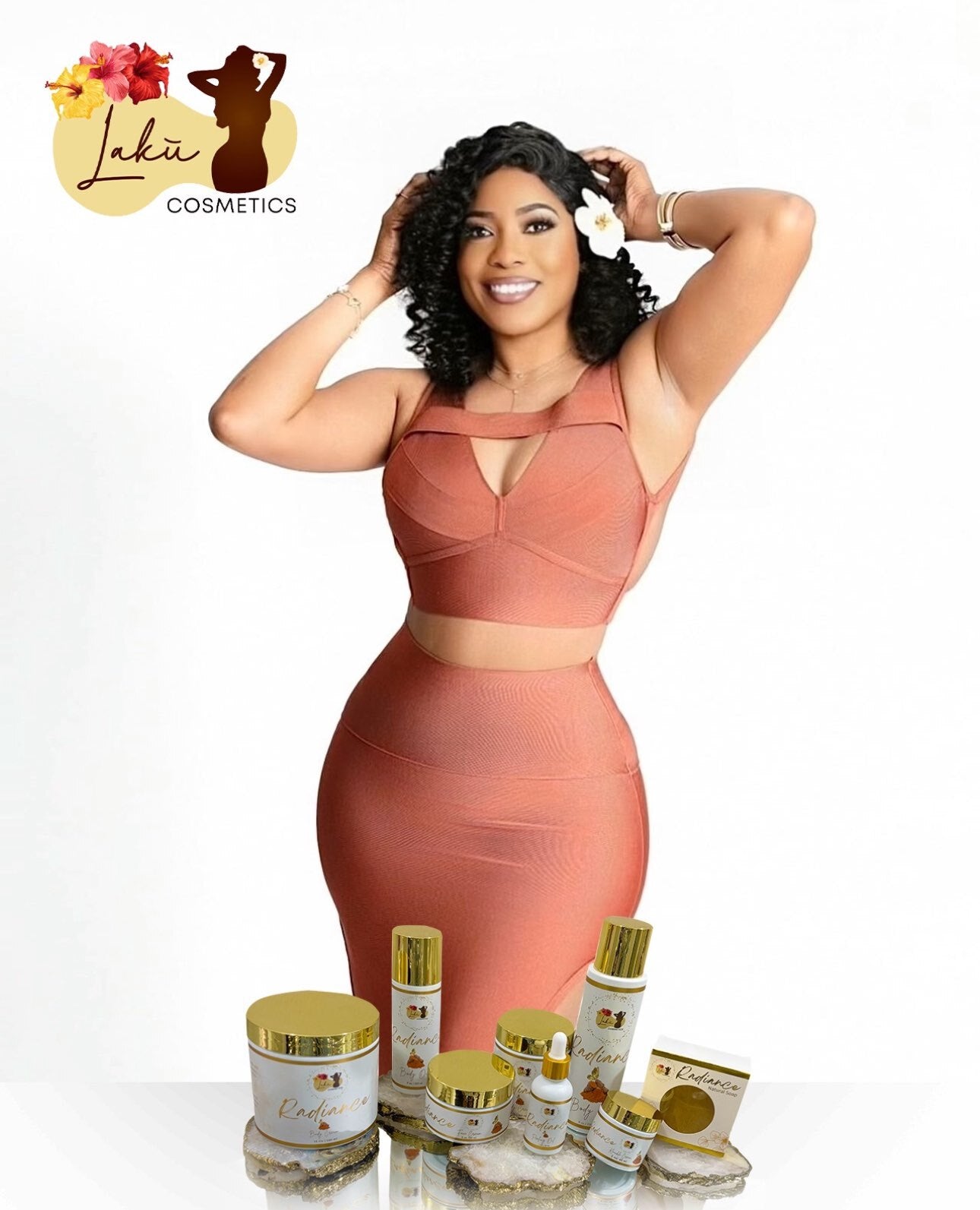
Reviewed by Hally — Certified Skincare Formulator and Repair Specialist
Every Lakū article is reviewed for FDA-compliant language and melanin-rich skin accuracy.
Every Lakū product carries a piece of Haitian skincare tradition. Not decoratively — structurally. The ingredients, the rituals, the timelines, the respect for what the skin is already doing — all of it comes from generations of Caribbean wisdom that Hally grew up with in Port-au-Prince and New Orleans.
This is the story of how kitchen traditions became clinical formulations, and why the combination matters for melanin-rich skin.
The kitchens
In Haitian households, skincare doesn't come from a store aisle. It comes from the kitchen cabinet, the market stall, and the grandmother who shows you the pastes she grew up using.
The constant ingredients in Haitian skincare tradition:
- Turmeric (golden paste for brightening and calming)
- Shea butter (deep moisture, especially on elbows and knees)
- Hibiscus (gentle exfoliation, rich in natural AHAs)
- Aloe vera (inflammation, healing, hydration)
- Coconut oil (barrier support, hair and skin)
- Jasmine rice water (toner and brightening rinse)
- Black soap (savon noir) (gentle, deep cleansing)
Each of these appears — in a modern form — somewhere in the Lakū line.
What grandmothers knew that skincare companies forgot
Three things modern skincare often misses that Haitian tradition always respected:
1. Consistency over intensity
Grandmothers didn't apply harsh exfoliants once a week and expect miracles. They applied turmeric paste every few days for months — consistent low-dose exposure. This matches what peer-reviewed science now tells us about cumulative active exposure: daily is better than strong.
2. Barrier-first thinking
Before any brightening, you moisturize. Shea butter and coconut oil were applied long before any active. You protect the skin first, then you refine it.
This is the exact opposite of what most modern routines do (brighten → irritate → damage barrier → trigger more PIH → repeat).
3. The ritual matters
Skincare wasn't extraction — "do this for your skin." It was connection — "sit with me, I'll do your face, we'll talk." Haitian skincare was often a communal practice. Mothers and daughters, aunts and nieces, friends before weddings.
The act of taking 10 minutes twice a day is itself healing in ways pharmacology doesn't measure.
Where tradition meets formulation
Here's where Hally's certification as a skincare formulator matters.
Ground turmeric stains skin and barely penetrates. But liposomal curcumin — turmeric's active compound encapsulated in phospholipid vesicles — penetrates through the skin barrier at 29x higher bioavailability than free-form curcumin.
That's the leap from tradition to formulation. The ingredient is the same one grandmother used. The delivery is engineered so it actually works.
Same pattern across the Lakū line:
- Shea butter appears in multiple products (soap, face cream, body oil) but paired with ceramides and squalane that weren't available to grandmother but amplify what shea already does
- Hibiscus (used in the Hibiscus Scrub) brings natural AHAs that exfoliate gently — the same role traditional hibiscus rinses played, but standardized and dosed
- Natural oils are pulled from tradition but combined with modern emulsifiers so they deliver evenly
Every product is a tradition + formulation equation.
Why Port-au-Prince and New Orleans
Hally's connection to two cities shaped everything.
Port-au-Prince was where she learned: turmeric, sitting still, patience, community. The sensory language of Haitian skincare.
New Orleans is where she formulated: certified training, lab access, batch testing, commercial scale. And importantly — a Southern Black cultural context that recognizes skincare as heritage, not luxury.
The Lakū brand name itself means "backyard" in Haitian Creole — a nod to the fact that the ingredients that work best on melanin-rich skin have always grown just outside the house.
What this means for you as a customer
When you buy Lakū, you're not buying a trend. You're buying:
- Ingredients that generations of Haitian, Creole, and Caribbean women have relied on
- Formulated with modern delivery science so they actually penetrate
- Dosed and tested so you know what you're applying
- Packaged respectfully for daily use
The timeline is real: 12–16 weeks to fade most PIH. The work is real: twice-daily application. The heritage is real: this isn't invented marketing.
Building the bridge
Our goal isn't to replace the DIY turmeric masks your grandmother made. It's to be the honest daily routine that complements those rituals.
Keep the ritual. Keep the mask. Keep the family practice. And in between, use a formulated product that makes measurable progress on the concern.
Tradition and formulation don't compete. They work together.
Take the Skin Quiz
Want to build a routine that respects both the heritage and the modern formulation work? Take our 90-second Skin Quiz and we'll match you with a set.
Or explore the whole line starting with our flagship Turmeric Face Cream.
FAQ
Do I need to know the tradition to benefit from Lakū?
No. The products work on melanin-rich skin regardless of whether you come from Caribbean heritage or not. Good skincare doesn't require cultural membership.
Are Lakū products certified?
Our formulations are made in licensed facilities with stability testing, batch consistency, and FDA-compliant labeling. Hally is a certified skincare formulator and repair specialist.
Are the ingredients sourced ethically?
Yes — turmeric, shea butter, and other botanicals are sourced from small producers where possible, with a preference for West African and Caribbean suppliers.
Where can I read more about the brand story?
Our About page goes into more detail about Hally, Port-au-Prince, and New Orleans.
Are any of these products tested on animals?
No. All Lakū products are cruelty-free and formulated without animal testing.


